
Beauty, Death and Motion
(Dance Is How Objects End)
Timothy Morton writes:
Beauty is how objects end. Beauty is death.
Within the framework of our obsession with the problem of reification, we are fond of invoking this radical philosopher. The formula is brutal, almost shocking. Morton does not say that beauty resides in things, nor that beauty is harmony. But that it appears at the precise moment when things cease to be what we thought they were.
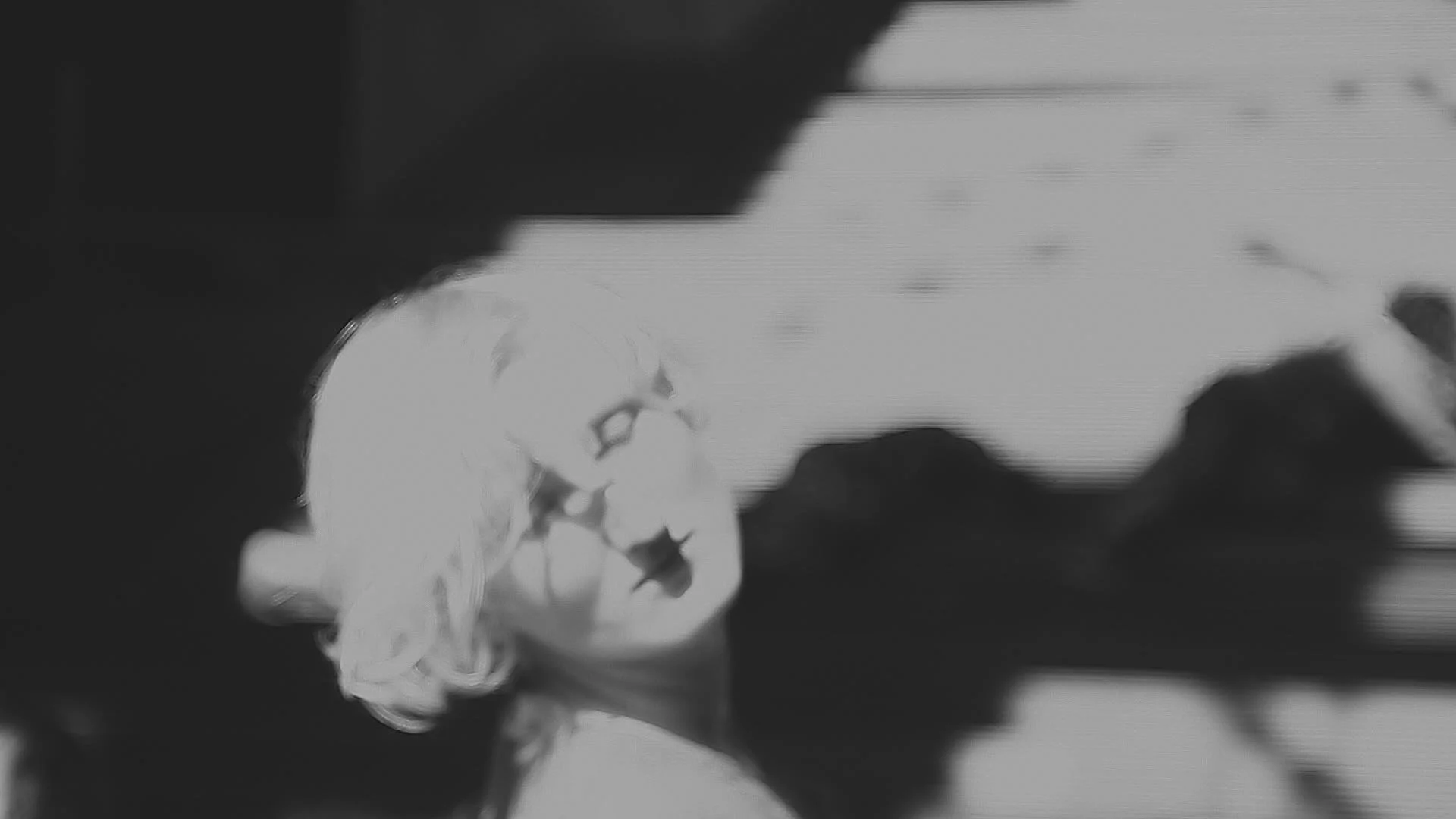
Explanation: An object (everything, basically) functions for as long as it holds itself as an object: identifiable, relatively stable, available to perception and use. But there comes a moment when this stability cracks. When its ontological closure loosens. It is there, according to Morton, that beauty emerges. Not as an added quality, but as an event. Beauty is not what crowns the object, it is what manifests when it begins to withdraw. An event of ending (Beauty is death). Beauty is therefore less a property than a disturbance. An affect. This article questions the place of dance (our second obsession) within such a definition.
There exist forms that do not stabilise long enough to require an ending. Dance is one of them. It does not exist before its appearance, nor after its disappearance. It promises neither preservation, nor closure, nor persistence. It appears, transforms, vanishes, without ever settling as a finished thing. At first glance, it therefore seems to escape Morton’s logic. If beauty appears at the moment when the object ceases to be an object, what are we to make of a form that never truly settles into objecthood? Is dance an exception? A blind spot in the theory?
A seemingly foreign image may intervene here: the Moon is falling towards the Earth. It is genuinely falling. It is pulled, continuously. If nothing interrupted this movement, it would crash into us in a final collision. But something happens: it falls sideways. It falls without ever reaching the ground. What we call an orbit is in fact a perpetually missed fall. It is simple, and vertiginous… We look at the Moon as a peaceful body. Reassuring. Yet its truth is violent: a suspended catastrophe, rendered invisible by the very equilibrium that sustains it. What is given to us is not the fall itself, but the movement that prevents its fulfilment. And we find this beautiful.
Why this detour? Because dance too continually produces that moment when form approaches its limit without ever resolving into it. It is made of tired bodies, gestures that exhaust themselves, losses of balance, physical constraints. It does not deny form, matter, or gravity. On the contrary. It is here that we must return to Morton: beauty is not tied to the object as such, but to what happens between the object and ourselves. To that moment when the world reminds us, without words, that nothing is guaranteed.
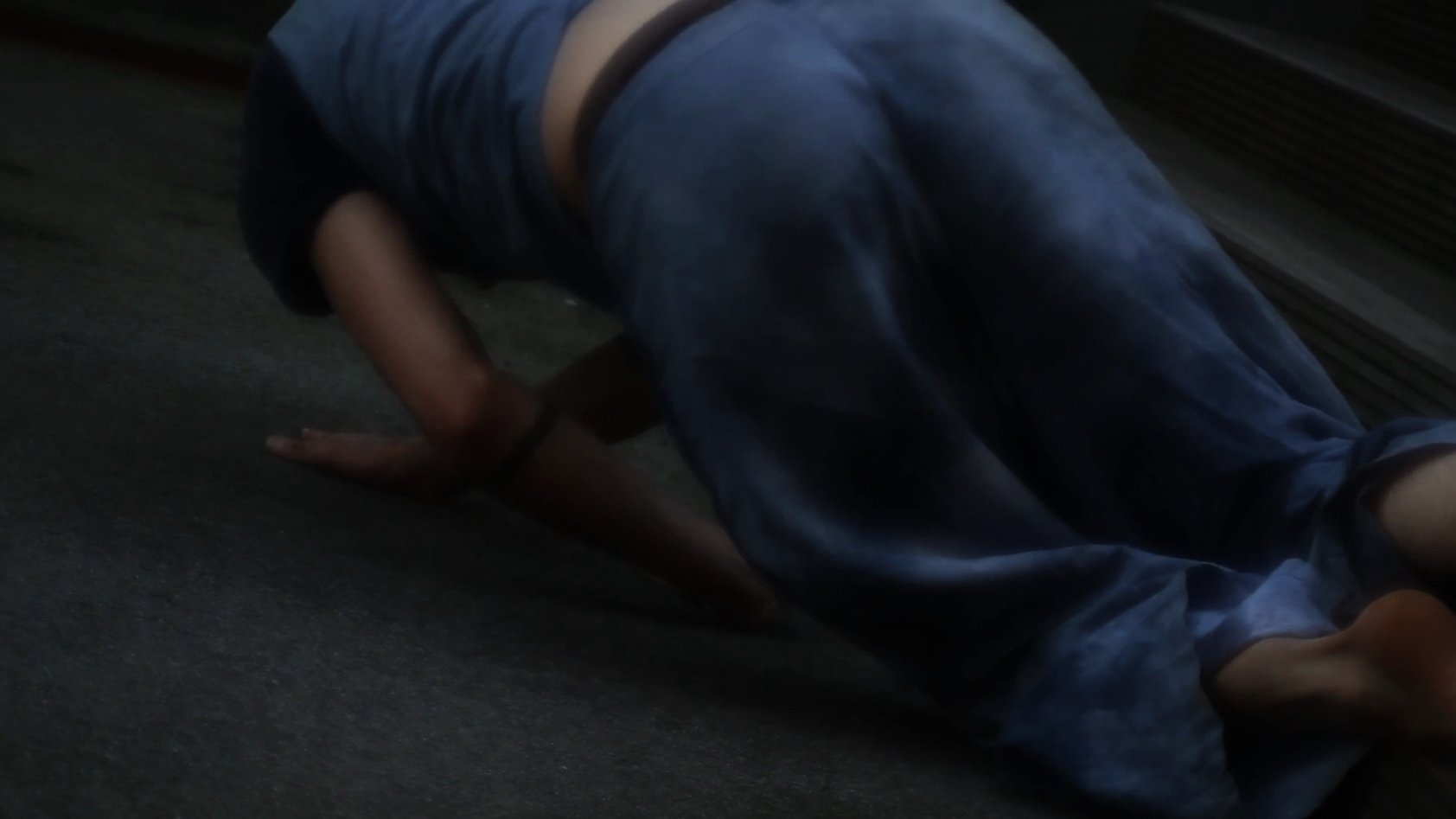
For what fascinates us in dance is not its ontological innocence. It is not a pure escape from the world. It is beautiful because it renders visible, almost continuously, that every object appears against the background of a micro-death — a withdrawal, an alteration, a wound. Dance does not deny the object, it exposes it to its vulnerability. And in doing so, it exposes us to ours. It endlessly replays, in a sensible form, what concerns us most intimately: our coming disappearance, our inability to endure, our vibration in the face of the end. Is dance beautiful because it continually sustains the affect of finitude? Because it continually reactivates — within us — the point at which something ceases to hold ? Yes. It is entirely forged to produce this affect. And if beauty is an affect, then dance is one of its most intense expressions. In fact, it corresponds wholly to Morton’s definition of beauty: a moment when the world ceases to present itself as a collection of stable objects, ceases to hold itself at a distance, and begins to vibrate within us. When the world suddenly becomes that which affects us. A wave that does not belong to us, but in which we are caught. Something larger than individual forms. Larger than dance itself. A hyper-affect? We may be here at the very heart of ecological darkness. And this thought is nothing abstract. As is usually the case with Morton: it is felt.
If we have seen that dance, in its presence-absence, can easily carry us far beyond words, there is another gesture that confronts this ordeal more harshly still: filming dance.
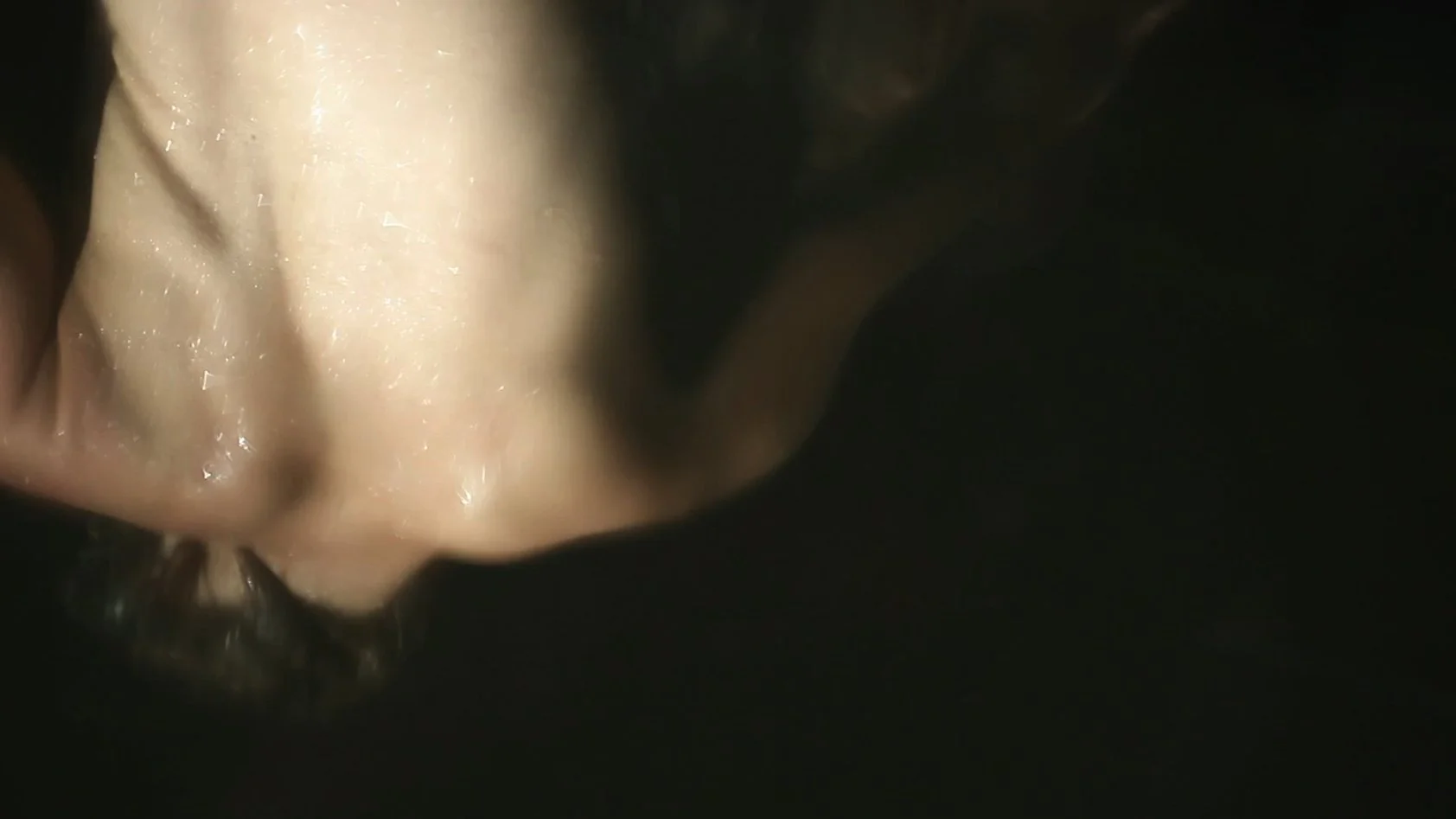
What becomes of dance film in light of all the above? Does filming not consist in doing precisely the opposite of what dance does? Filming attempts to stabilise. It gives durable form to what would otherwise pass. It produces an object where there was an event. And it is precisely here that something fails. Not because dance is essentially ungraspable, but because the camera introduces a contradiction: it promises an ending. A frame. From this perspective, the difficulty of filming dance is not technical, it is ontological. The film seeks a resolution. Dance remains elsewhere. We could say that what the image captures is not dance itself, but the gap between what is transforming and what attempts to fix it. Yes, dance throws filming into crisis. The image circles the gesture, perpetually missing it. The image becomes an orbit. And yet, this failure is not a defeat. It is also a place where beauty may appear. And Morton’s formula opens up a new level. Something strikingly relevant for anyone who strains to film dance honestly: the image of dance becomes beautiful when it reveals what it cannot contain. When the image accepts this tension, it ceases to be a mere tool of capture. It becomes, in turn, a site of affect. Where form begins to undo itself. A place of fissure.
Now, just out of curiosity, let us push our definition of beauty a little further. It is time to unpack the art of the dance film more closely and to distinguish between two gestures. There is shooting. And there is editing. They do not belong to the same regime.
To frame dance, camera in hand, is not yet to seek to fix anything. It is a present, tense, exposed act. The dancing body calls to another body. Movement calls for movement. To frame is to respond. To frame is almost to dance. More prosaically: the frame is narrow. It constantly reminds us of this. Something is always missing. Something always escapes. And yet we continue. There is in this gesture a singular emotion: a mixture of momentum and frustration, of intense presence and irreducible lack. Through Morton’s formula, we understand that this tension — this perpetually missed closure — is precisely what keeps framing alive. It is later that matters become complicated. When images become a construction material. When, in editing, the work of structuring and selecting begins. Another logic then installs itself. To edit is to want things to hold. To want them to last. Sometimes to correct what escaped. To outwit contingency. Editing may become a site of control. A resolution. There is nothing inherently wrong with this. But this is where the risk appears.
To conclude this theoretical travel, we could say we that dance does not resist film because it is ungraspable. It resists only when the image forgets that it too is finite. When the image ceases to vibrate. Perhaps the real question is not whether dance can be filmed. But whether the image is willing — or not — to die a little. And to become, in turn, a living gesture.
What a dance film gives to see may not be dance. Nor even its absence. But that unstable point where gesture, image, and our own finitude come into resonance. May it keep us within that vibration which never resolves. May something continue to vibrate. Something larger than the image. Larger than the body. Larger than dance itself.
A hyper-affect.
And us, in the middle.